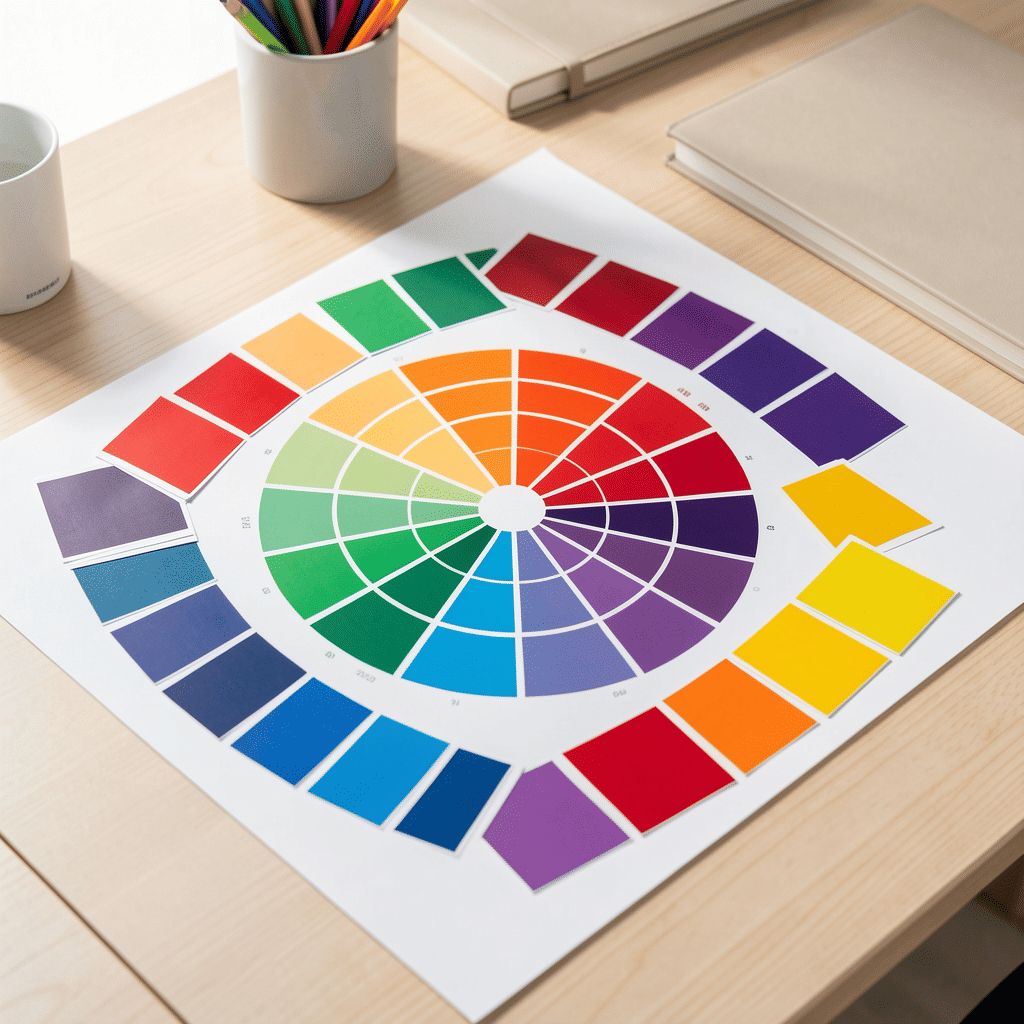
Color is an integral part of design, serving as a powerful tool that influences perception, mood, and even decision-making. Understanding color theories is essential for any graphic designer who aims to create captivating and meaningful designs. Here are five indispensable color theories that every designer should know:
- The Color Wheel and Color Harmony
At the core of any color theory is the color wheel, a circular illustration of colors arranged according to their chromatic relationship. Designers use the color wheel to create color harmony, which is essential for aesthetically pleasing designs. The main harmonies derived from the color wheel are complementary, analogous, triadic, and monochromatic. Complementary colors sit opposite each other on the wheel, providing strong contrast and visual interest. Analogous colors, which sit next to each other, offer a more subtle and harmonious look, while triadic colors, spaced evenly around the wheel, deliver vibrant and balanced palettes. Monochromatic schemes focus on variations in lightness and saturation of a single color.
- Theory of Warm and Cool Colors
Colors are often categorized as warm or cool, affecting the emotional reception and temperature perception in design. Warm colors like reds, oranges, and yellows evoke feelings of warmth, energy, and excitement. They are attention-grabbing and can be effectively used for emphasis or to elicit passionate responses. Cool colors, such as blues, greens, and purples, convey calmness, professionalism, and tranquility. Designers can leverage these inherent attributes to manipulate the atmosphere of their designs and influence audience emotions without using text or imagery.
- The Psychology of Color
The psychological impact of color is profound and complex. Each color evokes a different emotional response, which can significantly affect how a design is perceived. For instance, red can symbolize passion and urgency, blue can be calming and trustworthy, while green often represents growth and harmony. Understanding the psychological associations of colors and cultural differences is crucial to creating designs that communicate the intended message effectively. Designers must choose colors that align with the brand’s personality and the audience's cultural background to enhance communication and engagement.
- Color Context and Interaction
Josef Albers’ theory of color interaction highlights how colors change based on surrounding colors. This theory underscores the importance of context, showing that color perception is highly relative. A color can appear differently depending on adjacent hues, lighting, and even texture. Designers can use this knowledge to their advantage, creating depth, focus, and movement by carefully choosing and juxtaposing colors. Skillful manipulation of color interaction can lead to more dynamic and visually appealing designs that can capture an audience's attention and guide their gaze through the artwork.
- The 60-30-10 Rule
The 60-30-10 rule is a timeless method that helps designers create balanced and engaging color schemes. It suggests that 60% of a design should be a dominant color, 30% a secondary color, and 10% an accent color. This rule ensures that designs are cohesive and not overly cluttered, giving ample room for visual hierarchy and breathing space. It’s especially useful in interior design and graphic design alike, as it provides a structured approach, avoiding overwhelming the viewer while also embedding a logical flow through different visual elements.
In conclusion, mastering these top five color theories empowers designers to create visually impactful designs that resonate with audiences. A thorough understanding of these concepts enables designers to harness the emotional, psychological, and cultural dimensions of color, crafting compelling experiences that go beyond aesthetics. By incorporating these theories into their workflow, designers can ensure their creations not only attract but also engage and communicate effectively.